
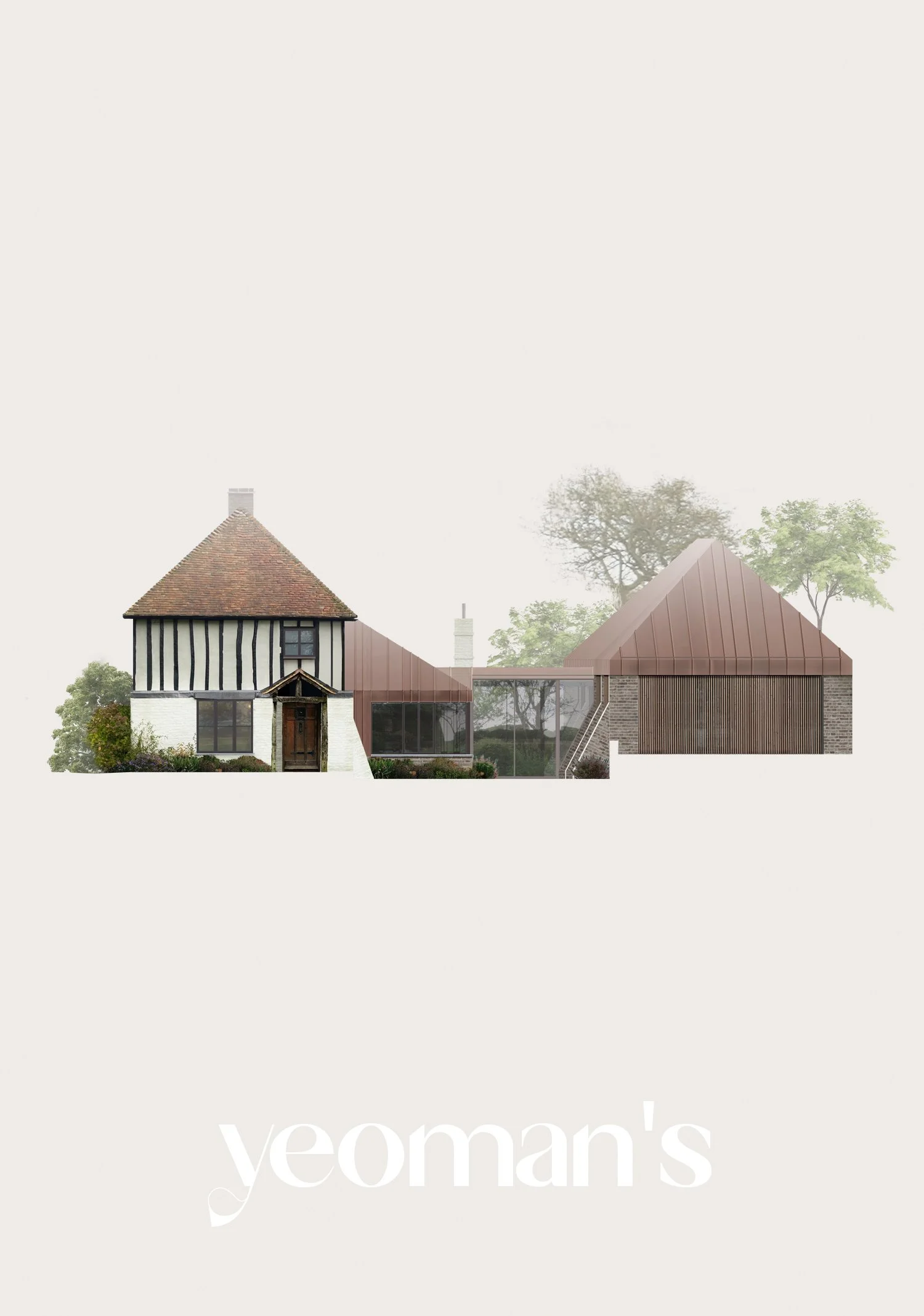
Born 1669, nestled in the Kent Downs Area of Outstanding Natural Beauty, stands a Listed Yeoman’s cottage surrounded by an orchard, ancient protected trees and expansive countryside. The cottage, full of nooks and crannies, characterful wide oak floorboards and exposed beams, had a rich history to discover. The new owners, a property broker and amateur racing driver and an archaeologist, bought the house after moving back from London to the countryside of their childhood. They had a romantic vision of bringing the cottage back to life and growing a family of their own in this unique setting.
However, a recent spate of insensitive piecemeal changes, coupled with exposure to the wind and rain, had left the house vulnerable. We found windows that had been insensitively upgraded without permissions, an ill conceived kitchen conservatory extension, ad-hoc services, partitions carving up the historic three cell plan, an asbestos lined garage and multiple ugly outbuildings installed without regard to the setting.
Working closely with a specialist team of heritage consultants, heritage engineers, planning consultants and an arboriculuralist, we began a process of researching, documenting and discovering the historical building’s evolution. Reading the building this way allowed us to strip back the layers of insensitive additions, uncover what was hidden, find where the fabric needed to breathe, or be repaired and find the opportunities for change.
The design brief evolved out of a desire to both secure the house for many generations to come and add in the layers of the couple’s own story. Naturally, the house needed to be warm and dry and fulfil the practical needs of a young family but it also needed to make space for the lifestyle they wanted- cosy spaces to curl up away from the elements, as well as ways to better connect with the landscape, support the need for remote working and embrace hobbies like dog walking, gardening and fixing up classic cars.
The first thing that struck me when I visited was how the whole of the historic South façade was covered up with a kitchen within a low ceiling, too hot in summer, too cold in winter, poorly constructed conservatory that was not fit for purpose and was literally damaging the fabric beneath. I proposed a replacement kitchen extension, with a taller roof and a full length central island pulling all the cooking functions away from the historic facade. This move to celebrate the evolution of the building and let this fabric breathe again, created a hardworking family hub that linked back to the dining room, adding a pantry and utility as support spaces. Linking through the former window openings we uncovered, we were following the way these buildings have always been extended (be it for a brewery, a buttery or a bakehouse) with minimal change or harm to the fabric. A replacement oak stair instead of an existing steep C20th one, the reopening of the other original staircase that had been covered up with a wardrobe, the restoration of the original three cell plan upstairs, a loft level bathroom, as well as sensitive restoration of finishes and reworked services completed the cottage proposals.
The idea of an annexe was born out of the owner’s enthusiasm for classic cars, a space dedicated to tinkering that still felt integrated with the wider home. Adding a glazed lightweight link back to the new kitchen extension, this link space would become the everyday hardworking family entrance as well as a vital connection to the landscape. Large opening barn door shutters would open views between kitchen and the annexe and a kitchen garden would be nestled between the two.